





The hidden cost of waiting, overanalyzing, and delaying transportation decisions in an environment where rates never stop rising.
______
Transportation challenges rarely lack visibility – more often, they lack action.
Many organizations recognize familiar signals:
- Costs drifting upward.
- Contracts are growing more complex.
- Surcharges expanding.
- Carrier performance inconsistencies.
Despite this awareness, meaningful adjustments are frequently delayed. Not because problems are unclear, but because logistics decisions often carry perceived risk, operational sensitivity, and structural complexity.
This pattern has a name.
Decision paralysis.
Why Decision Paralysis Is So Common in Logistics
Logistics decisions rarely present as simple choices.
They involve multiple variables:
• Pricing structures
• Contract mechanics
• Service implications
• Carrier relationships
• Operational disruption concerns
• Conflicting data signals
Unlike many business functions, transportation decisions exist at the intersection of finance, operations, customer experience, and vendor management.
Complexity naturally introduces hesitation.
When Problems Are Known — But Action Is Deferred
In many environments, rising transportation costs are not surprising.
They are expected.
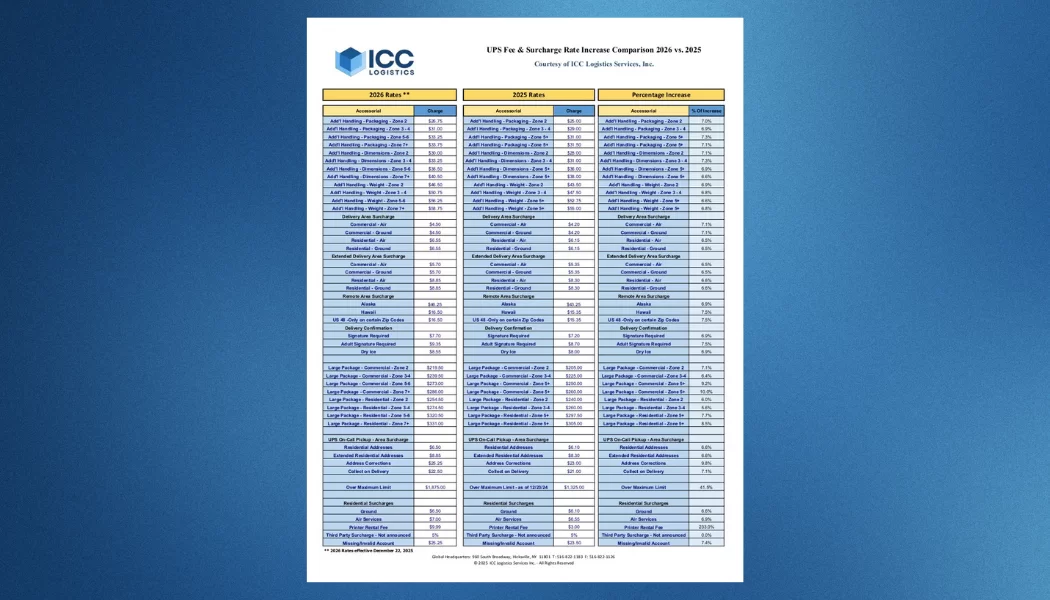
Annual rate increases, fuel mechanisms, dimensional pricing adjustments, and evolving accessorial structures are now standard across parcel and freight networks because cost inflation feels routine, and inefficiencies rarely trigger urgency.
Organizations adapt rather than evaluate – meanwhile, structural leakage compounds quietly.
The Financial Mechanics of Waiting
Hesitation in logistics is rarely neutral.
It is cumulative.
Delays often allow:
• Refund opportunities to expire
• Inefficient pricing structures to persist
• Surcharge exposure to expand
• Contract misalignment to compound
• Carrier leverage to erode
Importantly, carriers continuously adjust pricing systems regardless of shipper response.
DIM rules evolve – zone structures shift – thresholds tighten – fees expand.
Why Logistics Decisions Trigger Disproportionate Hesitation
Behavioral economics provides a useful context.
Decision paralysis often stems from:
Choice Overload
Multiple carriers, pricing models, contract variables, and service options create cognitive friction.
More options do not always produce faster decisions – they often slow them.
Risk Aversion
Transportation touches revenue, customer experience, and operational continuity.
The fear of disruption frequently outweighs the potential benefit of optimization.
Decision Fatigue
Logistics leaders operate in environments of constant variability:
• Rate changes
• Capacity fluctuations
• Service pressures
• Performance metrics
• Cost volatility
Over time, continuous decision demands reduce tolerance for additional evaluation cycles.
Carrier Pricing Inflation vs Shipper Response Cycles
Transportation pricing systems evolve continuously – most shipper response cycles do not.
Contracts often remain static for years.
Pricing structures gradually drift away from shipment behavior.
Small misalignments compound into structural inefficiencies.
Without periodic evaluation, inflation becomes embedded rather than managed.
How Decision Paralysis Creates Compounding Losses
The financial impact rarely appears dramatic.
It appears gradual.
• Slight DIM inefficiencies
• Expanding delivery area surcharges
• Contract thresholds no longer aligned
• Refund credits left unclaimed
• Minor pricing anomalies
Individually manageable – Collectively material.
Why External Analysis Often Accelerates Decisions
Decision paralysis rarely resolves through additional internal debate.
More frequently, progress occurs when organizations introduce:
• Independent perspective
• Market benchmarks
• Structured evaluation frameworks
• Financial modeling clarity
Logistics consultants primarily function as clarity providers.
They reduce uncertainty, isolate variables, and translate complexity into a measurable decision context.
Consultants Solve Friction — Not Just Costs
The value of consulting support is often misunderstood.
Savings matter, but decision acceleration frequently delivers equal value.
External analysis helps organizations:
• Separate noise from material issues
• Validate financial exposure
• Quantify opportunity vs risk
• Reduce internal bias
• Introduce decision structure
The Hidden Risk of Waiting to Renegotiate Contracts
Contract inertia is one of the most common sources of cost leakage.
Carrier agreements are dynamic in impact but static in structure.
Without periodic adjustment:
• Pricing mechanisms drift
• Incentives lose relevance
• Surcharges expand unchecked
• Leverage weakens
Waiting frequently locks companies into unfavorable pricing cycles.
A Practical Perspective on Logistics Hesitation
Most organizations delay logistics decisions for rational reasons:
Operational stability.
Resource constraints.
Competing priorities.
Uncertain outcomes.
The risk is rarely aware – it is underestimating the cumulative cost of waiting.
Frequently Asked Questions
Why do companies delay logistics optimization?
Logistics decisions involve operational risk, contract complexity, and multiple financial variables. Without clear benchmarks or structured evaluation, organizations often defer adjustments in favor of stability.
What causes decision paralysis in supply chain management?
Decision paralysis typically stems from choice overload, conflicting data, risk aversion, and decision fatigue. Transportation environments amplify these pressures due to pricing complexity and operational sensitivity.
How does delaying logistics decisions impact costs?
Delays often allow structural inefficiencies to persist. Refund opportunities expire, surcharge exposure expands, and contracts drift away from shipment behavior, leading to cumulative margin erosion.
How can a logistics consultant help with decision paralysis?
Consultants introduce independent analysis, benchmarking data, and structured evaluation frameworks. This reduces uncertainty, isolates variables, and accelerates decision-making.
What are the risks of waiting to renegotiate carrier contracts?
Carrier pricing systems evolve continuously. Without periodic renegotiation, contracts often become misaligned with shipment behavior, leading to embedded cost inefficiencies.
Suggested Reading:
Logistics Consulting: What It Is, When You Need It, and How It Saves Companies Millions
A Measured Next Step
Decision paralysis rarely reflects poor management.
More often, it reflects complexity.
Independent evaluation introduces structure, financial clarity, and measurable context — allowing organizations to move forward with greater confidence, regardless of the outcome.
Contact us today:

 to receive our FREE white papers: